When to Stain a New Wood Fence (and How to Tell It's Ready)
Our own FAQ says wait until the wood has properly cured. Here's what that actually looks like.
September 10, 2026 · 3 min read
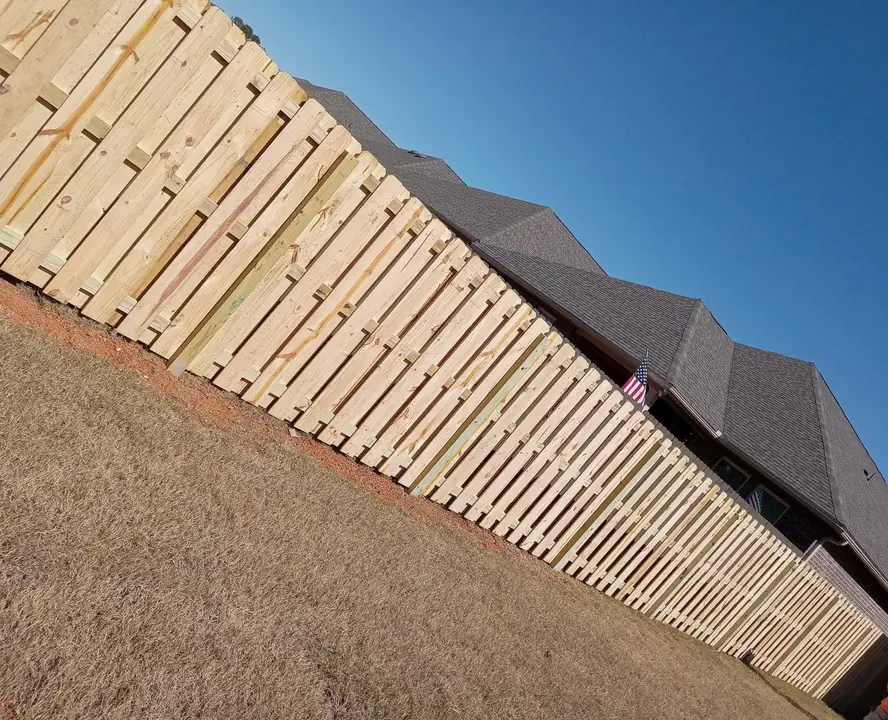
New wood fences almost always look better a few weeks after installation than the day they go up, and that's partly because people can't wait to stain them. It's an understandable instinct. A freshly stained fence looks finished. But wood that hasn't cured yet doesn't take stain the way people expect, and staining too early can cause more problems than it solves.
Why fresh lumber isn't ready right away
We build every wood fence with number 1 grade lumber, and even good lumber carries moisture when it comes off the truck, sometimes a lot of it depending on how it was milled and stored. Wood that's still wet inside doesn't absorb stain evenly. Instead of soaking into the grain, the stain tends to sit closer to the surface or get pushed back out as the wood keeps losing moisture over the following weeks. The result is blotching, uneven color, and in some cases a coat that has to be redone once the wood actually dries out underneath it.
Some new lumber also carries a mill sealant or surface treatment meant to protect it in transit and storage before it's ever installed. That layer has to weather off before stain can soak in the way it's supposed to. Stain applied over it tends to sit on top rather than penetrating, and it can peel or flake within a season instead of holding for years the way a properly timed coat will.
How to tell it's cured
There's a simple way to check without guessing. Pour a small amount of water onto a flat section of the wood, somewhere out of sight if you want to be tidy about it. If the water beads up and sits on the surface, the wood still has enough of its natural moisture and mill sealant left that it isn't ready. If the water soaks in within a minute or two, the wood has dried out enough to accept a stain properly.
How long that takes depends on the weather more than the calendar. A fence built during a dry spell in late summer might be ready in three or four weeks. One built during a wet spring can take two months or longer. There's no fixed number of days that applies everywhere, which is exactly why the water test matters more than a countdown.
It's worth testing more than one board while you're at it. A fence that catches full sun most of the day will dry faster than a run that sits in shade along a tree line, and boards facing south will usually cure ahead of boards on the north side of the same fence. Checking a few spots gives you a truer picture than checking just one and assuming the whole fence matches it.
What staining actually does once the timing is right
Stain isn't just color. A quality stain slows how fast the wood absorbs and releases moisture, which is what keeps a fence from cupping, splitting, and graying unevenly over the years. Alabama summers are humid and the sun sits hard on a south facing run for most of the day, and both of those work against untreated wood. Once the fence has cured and takes the stain properly, it's doing real work protecting the lumber underneath it, not just making the fence look nice for a season.
What we tell customers
Every wood fence we build carries a one year workmanship warranty, and part of doing right by that warranty is being honest that staining is on the owner's timeline once the wood has cured, not ours. We're glad to look at a fence we built and tell you whether it's ready, and if you'd rather have it handled as maintenance, staining and sealing is something we do too, along with panel and post repair on wood that's been standing a while.
If you're not sure whether your fence is ready, or if an older wood fence out at your place is starting to gray and needs attention, give us a call at (256) 203-1243. We answer calls and emails within 48 hours, and we can tell you over the phone what to look for before you buy a single can of stain.
Athens Fence Co, (256) 203-1243
Call (256) 203-1243More articles
Why Every Fence Post We Set Goes In Concrete
A fence is only as steady as the ground holding its posts, and Limestone County clay does not sit still.
Wood, Vinyl, Aluminum, or Chain Link: Picking the Right Fence for Your Property
The right fence material depends on what the fence actually needs to do, not which one looks best in a photo.