Wood, Vinyl, Aluminum, or Chain Link: Picking the Right Fence for Your Property
The right fence material depends on what the fence actually needs to do, not which one looks best in a photo.
September 10, 2026 · 3 min read
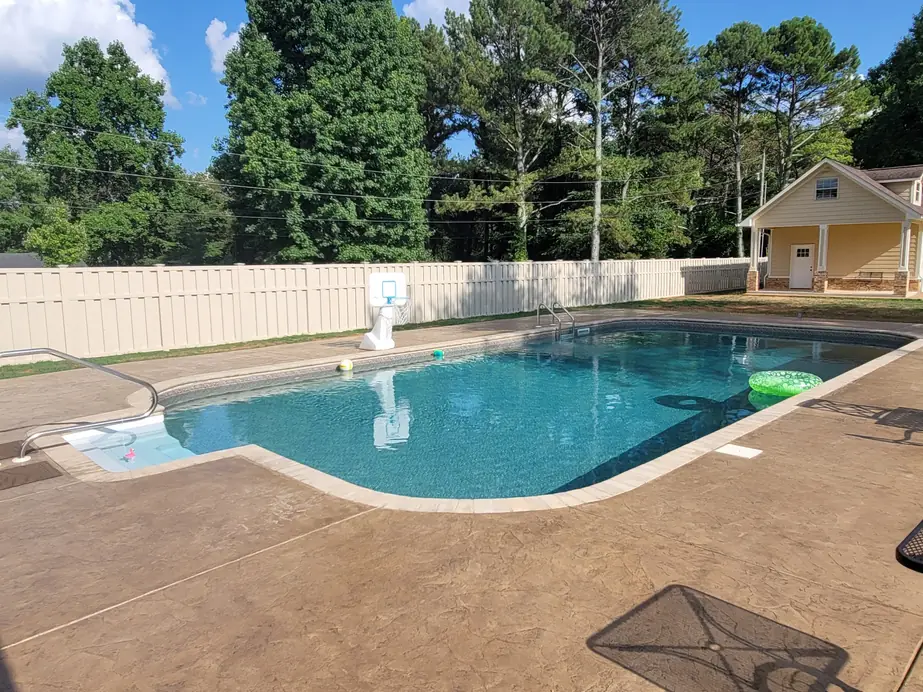
Most people who call us already have a rough idea of what they want, but a fair number are choosing between two or three materials and want to know what actually separates them. We install wood, vinyl, aluminum, and chain link, along with iron, ornamental, and composite fencing, and each one earns its place for different reasons.
Wood: the most flexible, and the one that asks the most of you
Wood is still the material most people picture when they think of a privacy fence, and for good reason. It can be built tall, solid, and completely private, and it takes stain or paint in whatever color fits the house. We build every wood fence with number 1 grade lumber and set every post in concrete. The tradeoff is upkeep. Wood needs to cure before it's stained, and it needs to be restained now and then to keep protecting the lumber underneath. If you want a fence you're willing to maintain every so often in exchange for full privacy and a classic look, wood is usually the right call.
Vinyl: low maintenance, consistent look
Vinyl doesn't rot, doesn't need staining, and holds its color for a long time without much attention. It comes in privacy panels, picket styles, and farm style rail fencing, and it handles Alabama humidity well simply because there's no grain for moisture to work into. The tradeoff runs the other way from wood. If a panel does get damaged, you're replacing that section rather than sanding and restaining it. For pool enclosures and yards where you want a finished look without ongoing maintenance, vinyl is a strong fit.
Aluminum: security and sightlines without the bulk
Aluminum ornamental fencing gives you a fence you can see through, which matters a lot around pools, front yards, and properties where you want the house and landscaping to stay visible rather than boxed in behind a solid wall. It doesn't rust the way plain iron can, and it holds up well with almost no maintenance. It's not a privacy fence, and it's not the right choice if blocking sightlines is the goal, but for defining a property line, securing a pool, or dressing up a front yard without hiding it, aluminum does that job better than any other material we install.
Chain link: the workhorse
Chain link doesn't get the attention the other materials do, but it's still the most practical choice for a lot of properties, especially larger lots, dog runs, and anywhere the fence needs to contain something or someone more than it needs to look a certain way. It's fast to put up and it holds up for years with almost no maintenance. It's also the most honest fence there is. Nobody buys chain link expecting privacy, and it delivers exactly what it promises.
Iron and composite, for specific situations
We also install wrought iron and composite fencing, which tend to answer a narrower question than the four materials above. Iron reads as older and more formal than aluminum, and some owners want that specific look on a historic or traditional style property, though it needs more upkeep against rust than aluminum does. Composite splits the difference between wood and vinyl, giving you a wood-like look with less of the maintenance wood asks for. Neither is the default choice for most yards, but both are worth asking about if the standard four don't quite fit what you have in mind.
What actually decides it
In practice, the decision usually comes down to three questions: how much privacy do you need, how much maintenance are you willing to do, and what is the fence actually there to accomplish, whether that's keeping a dog in, keeping deer out of a garden, securing a pool, or marking where your property ends. John Hand handles our estimates and measurements, and he'll walk your property with you and talk through which material actually fits what you're trying to do, not just what looks good in a photo.
Whatever material ends up being the right fit, one thing doesn't change. Every post we set goes into concrete, using number 1 grade lumber on wood installs, and every job carries our one year workmanship warranty. The material changes the look and the maintenance. It doesn't change how carefully the fence gets put in the ground.
Estimates are free and usually back to you within a week. Call (256) 203-1243 and we'll get John out to your property.
Athens Fence Co, (256) 203-1243
Call (256) 203-1243More articles
Why Every Fence Post We Set Goes In Concrete
A fence is only as steady as the ground holding its posts, and Limestone County clay does not sit still.
When to Stain a New Wood Fence (and How to Tell It's Ready)
Our own FAQ says wait until the wood has properly cured. Here's what that actually looks like.