Why Gates Fail Before the Rest of the Fence Does
If one part of your fence is going to need attention first, it's almost always the gate.
September 10, 2026 · 4 min read
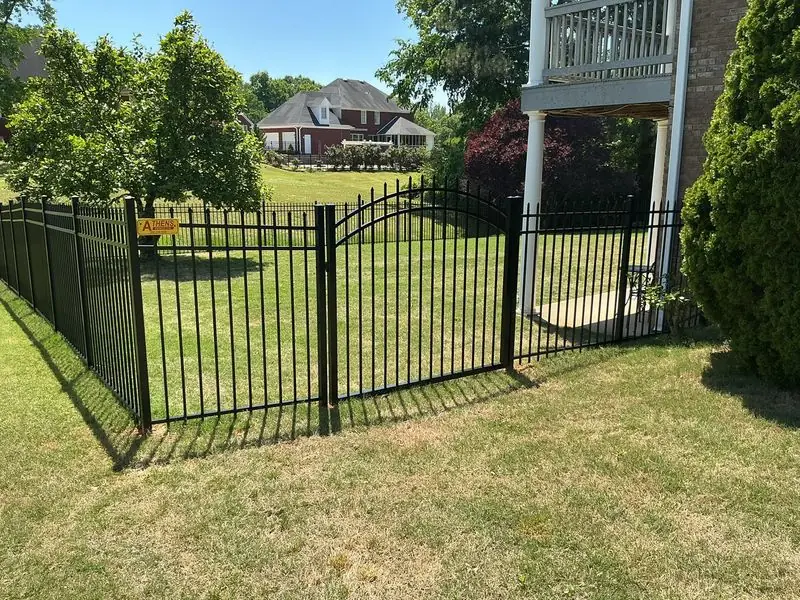
Ask anyone who's owned a fence for a few years what finally needed fixing, and it's rarely a fence panel. It's a gate. Gates sag, drag on the ground, stop latching, or swing open on their own, usually well before the rest of the fence shows any sign of age. There's a reason for that, and it comes down to plain physics rather than bad luck.
A gate hangs off one post, and that post takes the load
Every fence panel is supported along its whole length, spread evenly across several posts. A gate is different. It's a solid panel hanging off one edge, held up entirely by the hinges on one post. That post is carrying the full weight of the gate as a lever arm, and every time the gate swings, opens, or gets bumped, that force works against the post and the hinges. Over time, even a well built gate puts real, repeated strain on one specific point, which is exactly why that's where problems show up first.
What actually causes a gate to sag
There are usually two things going on, sometimes both at once. The hinge post itself can shift if it wasn't set deep enough or wasn't anchored well against the soil around it, which is exactly why we set every gate post in concrete just like every other post on the job. And the hardware, the hinges and latch, can wear or loosen from years of the gate's own weight working against them. A gate that's dragging on the ground is telling you one of those two things has happened, and it's worth having someone look at it before the weight of the gate starts pulling the post out of plumb too.
You can usually tell which one it is without any tools. Grab the gate near the latch and lift gently. If the whole gate, hinges and all, moves at the post, the post has come loose in the ground. If the gate itself flexes or the hinges visibly shift while the post stays still, the hardware is the problem. Either way it's worth having someone look at it before the smaller issue turns into the bigger one, since a loose post left alone will eventually work the hardware loose too.
What a well hung gate actually involves
Hanging a gate right starts before the gate ever goes up. The hinge post has to be set deep and set in concrete, because that post is doing more work than any other post in the fence. The gate frame itself needs to be square, because a gate that racks even slightly out of square will bind against the latch post no matter how good the hinges are. Then the hinges have to be sized for the actual weight of the gate, not just whatever hardware happens to be on hand, and set so the gate swings clear of the ground through its full arc, including after a few years of settling.
It's a small part of most fence jobs by square footage, but it's where the craftsmanship actually shows. A fence can look fine from the street with a gate that's slightly off. It's the part the owner touches every day, so it's the part that gets noticed first when something's wrong.
Double gates, the kind used for a driveway or to get equipment into a backyard, add one more thing to get right. Both leaves have to meet evenly in the middle, and there's usually a drop rod or a center catch holding the free leaf in place so the whole opening doesn't rely on one set of hinges. If that center catch isn't seated properly, the strain that should be split between two hinge posts ends up landing mostly on one of them, and that post wears faster than it should.
When it's worth a repair versus a whole new gate
Most sagging gates don't need to be replaced. Often it's a matter of resetting the hinge post properly, replacing worn hardware, or re-squaring the frame. One of our customers, Ron Jackson, mentioned we came back and re hung one of his gates at no charge after the original install. That's not unusual for us. We stand behind our work with a one year workmanship warranty, and a gate issue caught early is almost always a straightforward fix rather than a rebuild.
If a gate on your property has started dragging, sticking, or swinging wrong, call us at (256) 203-1243. We do repair work in addition to new installs, and we'd rather look at it and tell you honestly what it needs than have you live with a gate that's slowly getting worse.
Athens Fence Co, (256) 203-1243
Call (256) 203-1243More articles
Why Every Fence Post We Set Goes In Concrete
A fence is only as steady as the ground holding its posts, and Limestone County clay does not sit still.
When to Stain a New Wood Fence (and How to Tell It's Ready)
Our own FAQ says wait until the wood has properly cured. Here's what that actually looks like.